

Transport Management Services 2026 - Redefining Visibility, Control, and Performance in Logistics
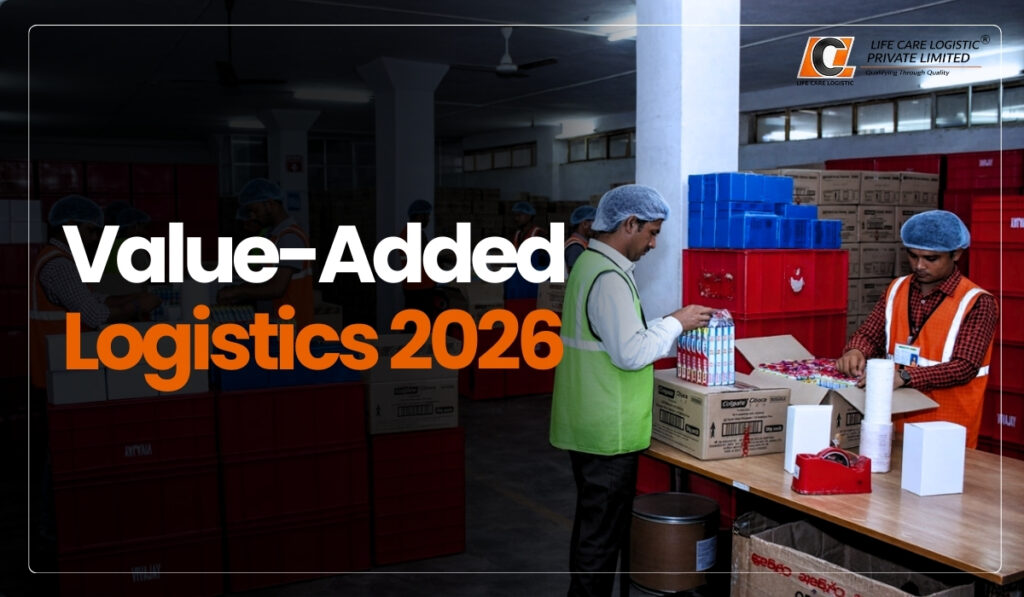
India’s logistics sector is experiencing a subtle but fundamental shift. The conversation has moved beyond square footage and pallet positions to encompass what happens inside warehouses before products reach customers. As e-commerce brands negotiate six-month contracts instead of multi-year leases and D2C companies demand micro-fulfillment capabilities, the logistics providers thriving in 2026 aren’t those with the most space—they’re the ones transforming warehouses into pre-retail assembly centers where products gain value before dispatch.
The Economics Driving Value-Added Demand
India’s third-party logistics market, valued at $36 billion in 2025, faces projections ranging between $48 billion and $73 billion by 2030—growth fueled not by storage expansion alone but by services that extend beyond traditional warehousing. The math is straightforward: when logistics providers pre-assemble popular product bundles, warehouse workers handle one bundled item instead of picking multiple separate products, cutting pick time and reducing labor costs by 20-30% while simultaneously improving customer experience.
This efficiency gain matters increasingly as quick-commerce players require urban dark stores within two kilometers of demand pockets and e-commerce platforms promise next-day delivery across 19,000 pin codes. The logistics infrastructure supporting these commitments can’t rely on basic storage and transportation—it requires sophisticated lifecare logistic value added services that compress time, reduce errors, and enable mass customization at scale.
Consider the practical implications. A cosmetics brand launching seasonal gift sets no longer ships individual products to retailers for assembly. Instead, their logistics partner performs kitting operations—grouping complementary items, applying custom packaging, adding promotional inserts, and creating shelf-ready units that move directly from warehouse to retail display. This approach eliminates an entire distribution layer while ensuring presentation consistency and reducing retail labor requirements.
What Value-Added Actually Means: Beyond the Buzzword
The term “value-added services” has become logistics industry shorthand for any activity beyond basic storage and transportation. In practice, these services cluster into several distinct categories, each addressing specific supply chain inefficiencies or market requirements that standard logistics can’t accommodate.
Kitting and Assembly Operations: The process of combining different components to create unified packages serves businesses offering products requiring multiple pieces. Electronics companies bundle devices with accessories, manuals, and warranty cards. Promotional campaigns combine complementary products into ready-to-ship packages. Subscription box services assemble curated selections based on customer preferences. These operations, performed at scale within warehouses, enable product variety without proportional inventory complexity.
Custom Packaging Solutions: Beyond protecting products during transit, packaging increasingly functions as brand communication and customer experience driver. Logistics providers offering custom packaging services handle seasonal wrapping, brand-specific box design, promotional labeling, anti-static packaging for electronics, and moisture-resistant materials for products requiring environmental protection. The capability transforms standard shipping containers into brand ambassadors while maintaining efficiency through bulk processing.
Labeling and Compliance Services: Product labeling extends well beyond price tags. Batch coding ensures traceability, expiry date marking meets regulatory requirements, barcode application enables inventory accuracy, and multi-language labeling facilitates market expansion. For businesses entering new regions or categories, outsourcing these services to logistics partners with established processes proves more efficient than developing internal capabilities for potentially temporary requirements.
Quality Control and Inspection: Pre-shipment quality verification reduces customer complaints, minimizes returns, and protects brand reputation. Logistics providers conducting systematic quality checks identify defective units before dispatch, verify product specifications against order requirements, and ensure packaging integrity. This service becomes particularly valuable for businesses importing products or working with multiple manufacturing partners, where quality consistency requires independent verification.
Returns Management Systems: Reverse logistics—handling product returns efficiently—directly impacts customer satisfaction and operational costs. Sophisticated providers manage pickup coordination, inspection protocols, sorting processes, refurbishing operations where applicable, and reintegration into sellable inventory or appropriate disposal. A streamlined returns system converts potential customer frustration into brand loyalty while recovering maximum value from returned merchandise.
The Technology Enabler: Why Systems Matter
Here, value added services 2026 India depend fundamentally on technology infrastructure that basic warehousing operations can bypass. Manual kitting operations tracking components across spreadsheets can’t scale to handle thousands of SKU combinations. Custom packaging requiring different materials and configurations needs digital systems to map product codes to packaging specifications. Quality inspection protocols require documentation systems proving compliance rather than relying on worker memory.
Warehouse Management Systems (WMS) designed for value-added operations include modules for kit definition, component tracking, assembly verification, and quality checkpoint documentation. These systems interface with client ERP platforms, automatically triggering assembly operations when orders arrive, deducting component inventory accurately, and updating finished kit availability in real-time. Without this integration, value-added services remain manual interventions rather than systematic capabilities.
Barcode scanning technology, RFID tracking, and mobile applications enable accuracy throughout value-added processes. Workers scan components during kitting to verify the correct items in proper quantities. Quality inspection checkpoints capture images documenting product condition. Packaging stations reference digital specifications, ensuring correct materials and labeling for each order. This technology layer converts potentially error-prone manual operations into traceable, verifiable processes meeting audit requirements and customer expectations.
Real-World Applications: Where Value-Added Services Prove Essential
The abstract concept of value-added services becomes concrete when examining specific industry applications where these capabilities transition from convenience to competitive requirement.
E-commerce and D2C Brands: Online retailers face simultaneous pressure for product variety, rapid fulfillment, and presentation quality. Value-added services enable these brands to offer customized gift wrapping, personalized messages, promotional bundling, and seasonal packaging without establishing internal assembly operations. A skincare company can offer curated sets combining products based on skin type without maintaining separate inventory for each combination—the logistics partner assembles kits based on order specifications.
Consumer Electronics: Products requiring accessory bundling, protective packaging, and compliance labeling benefit substantially from value-added logistics. A smartphone distributor can offer market-specific packages—one configuration for online sales, including a protective case and screen protector, another for retail, including only basic accessories—without managing separate product codes or inventory locations. The logistics partner performs the final configuration based on the order destination.
Pharmaceutical and Healthcare: Products subject to regulatory requirements, temperature sensitivity, and stringent quality standards require logistics partners capable of compliance documentation, specialized packaging, and systematic quality verification. Value-added services here extend beyond convenience to become regulatory necessities—proper labeling, temperature monitoring documentation, tamper-evident packaging, and batch traceability.
Seasonal and Promotional Campaigns: Businesses running time-limited promotions or seasonal offerings face inventory challenges—maintaining specialized packaging year-round proves wasteful, yet lacking capability during peak periods constrains marketing flexibility. Logistics partners offering flexible value-added services enable promotional packaging, limited-edition bundling, and campaign-specific configurations without requiring permanent infrastructure investment.
The Hidden Cost Reduction: Why Outsourcing Makes Financial Sense
Value-added services appear expensive when compared narrowly to basic storage rates. A more comprehensive analysis reveals substantial cost advantages that justify premium pricing.
Outsourcing eliminates fixed costs associated with internal operations. Businesses avoid investing in packaging equipment, assembly workstations, quality inspection tools, and specialized storage for components. They don’t hire and train assembly staff, maintain packaging material inventory, or develop quality control protocols. These avoided costs often exceed the premium paid for value-added logistics services, particularly for businesses experiencing seasonal demand fluctuations or testing new product configurations.
Operational efficiency gains compound savings. Specialized logistics providers perform kitting and assembly operations faster than general warehouse staff through dedicated workflows, specialized equipment, and accumulated expertise. This speed advantage reduces labor hours per unit while improving accuracy. Quality control performed by trained inspectors catches defects earlier than customer complaints, avoiding return costs, potential compensation, and brand damage that exceeds the inspection service cost.
Scalability without capacity constraints represents another financial benefit. During promotional periods or seasonal peaks, businesses leveraging logistics partners with value-added capabilities can dramatically increase output without hiring temporary staff, leasing additional space, or purchasing equipment. The provider absorbs demand fluctuation through their multi-client model, enabling individual businesses to access surge capacity without maintaining permanent infrastructure for peak periods.
Evaluating Capabilities: What Questions Matter
For businesses considering value-added logistics partnerships, evaluation requires examining capabilities beyond facility tours and rate negotiations. Several questions provide insight into operational maturity and service sustainability.
Process documentation inquiries reveal operational sophistication: How are kitting specifications documented and updated? What quality control checkpoints exist for custom packaging? How are component shortages handled during assembly operations? What error rates do you maintain for labeling accuracy, and how is this measured? Providers with detailed, documented answers demonstrate systematic capabilities rather than ad-hoc accommodations.
Technology integration questions assess scalability: What WMS modules support value-added operations? How do you integrate with client ERP systems for kit definitions and inventory deduction? What reporting exists for value-added service performance metrics? Can your systems handle high-mix, low-volume configurations or only standard bundling? Technology limitations constrain service flexibility regardless of physical capacity.
Capacity and flexibility discussions determine partnership sustainability: What volume fluctuations can you accommodate without advance notice? How quickly can you implement new kitting configurations or packaging specifications? What happens when component availability changes or products face recall? Do you maintain backup suppliers for packaging materials? These questions reveal whether providers offer genuine flexibility or simply promise it during sales processes.
Conclusion
India’s logistics evolution in 2026 reflects broader recognition that competitive advantage increasingly depends on supply chain sophistication rather than merely efficient transportation. Value-added services represent the operational manifestation of this shift—converting warehouses from passive storage locations into active value creation nodes where products gain final configuration, presentation quality, and market readiness before reaching customers.
For businesses navigating partnership decisions, the evaluation framework must extend beyond traditional metrics of storage cost and transportation time to encompass the systematic capabilities, technology infrastructure, and process maturity that enable reliable value-added service delivery. The providers succeeding in this environment demonstrate not merely willingness to offer additional services but genuine operational competence in executing them consistently at scale—transforming value-added services from occasional accommodations into core competitive differentiators within India’s maturing logistics landscape.
Enterprise-grade logistics solutions with integrated warehousing, transport networks, and quality-driven operational controls.