

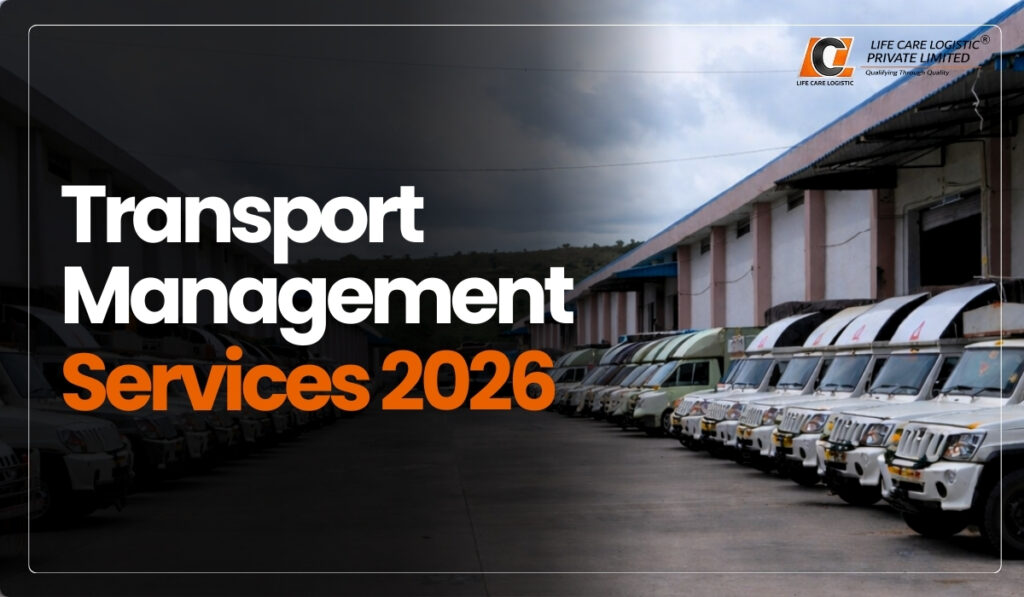
Transport Management Services 2026 - Redefining Visibility, Control, and Performance in Logistics
India’s freight transportation sector is navigating a critical transition where operational efficiency, real-time visibility, and execution reliability determine competitive positioning. As supply chains become increasingly performance-sensitive, businesses are discovering that transport management extends far beyond vehicle availability to encompass route optimization, cargo safety protocols, technology integration, and systematic process adherence. Understanding what constitutes effective transport management in 2026 requires examining the capabilities, systems, and operational frameworks that separate strategic logistics partnerships from transactional freight arrangements.
Market Forces Driving Transport Management Evolution
India’s freight and logistics market is projected to reach USD 592.36 billion by 2031, expanding at a 9.07% CAGR from 2026 onward. Road transport continues dominating with 69.97% of freight tonnage in 2025, yet the sector is experiencing fundamental shifts in client expectations regarding delivery precision, cargo tracking, and cost transparency. This growth trajectory reflects more than volume expansion—it signals transformation in how businesses evaluate transport providers based on technology capabilities and execution consistency rather than merely freight rates.
The Transportation Management System (TMS) market in India is expected to grow at 20.2% CAGR through 2033, driven by businesses recognizing that transport visibility and analytics directly influence inventory planning, customer service levels, and working capital efficiency. This rapid technology adoption indicates that transport management is transitioning from an operational function to a strategic capability, with digital platforms enabling proactive decision-making throughout the transportation cycle.
Industry dynamics are creating new evaluation criteria for transport partnerships. GPS-enabled tracking has evolved from a differentiator to a baseline requirement, with clients now expecting granular visibility, including vehicle location updates, geofencing alerts for critical zones, estimated arrival time calculations based on actual traffic conditions, and exception management protocols addressing delays proactively. The question businesses face isn’t whether their transport provider offers tracking, but rather how comprehensively that visibility integrates with their operational systems and enables actionable intelligence.
What Effective Transport Management Actually Delivers
Transport management services 2026 must address multiple operational dimensions simultaneously—cargo safety, delivery timeliness, cost efficiency, documentation accuracy, and regulatory compliance. Organizations providing these services orchestrate complex operations involving vehicle maintenance, driver management, route planning, load optimization, and client communication through systematic processes rather than ad-hoc responses.
Route Optimization and Load Planning: Effective transport management begins before vehicles depart. Analyzing delivery requirements, vehicle capacities, traffic patterns, and client priority levels enables optimized routing that reduces empty miles, consolidates shipments efficiently, and sequences stops to minimize total transit time. Advanced providers utilize route optimization software that factors real-time traffic data, vehicle restrictions, delivery time windows, and fuel consumption patterns to generate efficient dispatch plans. This systematic approach differentiates professional transport management from basic pickup-and-delivery services.
Vehicle Maintenance and Fleet Readiness: Transport reliability depends fundamentally on vehicle availability and mechanical soundness. Organizations maintaining GPS-enabled multi-utility fleets implement preventive maintenance schedules, conduct pre-trip vehicle inspections, maintain service records documenting all repairs and replacements, and retire aging vehicles before reliability issues compromise service delivery. These protocols ensure that cargo movements aren’t disrupted by preventable mechanical failures while maintaining safety standards throughout fleet operations.
Driver Management and Safety Protocols: Transport execution quality depends heavily on driver competence, safety adherence, and client interaction professionalism. Effective transport management includes driver training programs covering safe driving practices, cargo handling procedures, documentation requirements, and customer service standards. Regular safety briefings, performance monitoring, and incident analysis create accountability frameworks that reduce accidents while improving delivery consistency. When transport providers demonstrate low accident rates and high driver retention, they signal operational discipline that benefits client cargo and delivery timelines.
Load Security and Cargo Protection: Transport operations involve inherent cargo risks—damage from improper loading, theft during transit, environmental exposure, and handling incidents during delivery. Professional transport management implements load verification protocols confirming cargo condition before departure, proper securing techniques preventing load shifts during transit, sealed container protocols for high-value goods, and documented handover procedures at destination points. These systematic approaches reduce cargo claims while protecting both provider and client interests throughout the transportation cycle.
Technology Integration: Visibility Beyond Vehicle Location
While GPS tracking provides fundamental transport visibility, comprehensive transport management requires integrated technology platforms connecting vehicles, warehouses, and client systems for synchronized supply chain operations.
Real-Time Tracking and Monitoring: Modern transport management platforms integrate GPS vehicle tracking with mobile applications, enabling driver communication, electronic proof of delivery (e-POD) capture, and exception reporting. Clients receive automated updates at critical milestones—dispatch confirmation, transit updates, arrival notifications, and delivery completion—eliminating information gaps that create planning uncertainty. This visibility enables businesses to coordinate receiving operations, alert customers about delivery timing, and respond proactively to transit delays rather than discovering issues after delivery windows close.
Transportation Management System Integration: Sophisticated transport operations utilize TMS platforms that connect with warehouse management systems, enterprise ERPs, and client order systems. This integration enables automated order-to-dispatch workflows, optimized vehicle assignment based on cargo characteristics, consolidated shipping documentation, and performance analytics tracking delivery accuracy, on-time performance, and cost per shipment. When lifecare logistic transport management services integrate these platforms effectively, they create operational intelligence that supports continuous improvement and client-specific performance reporting.
Data Analytics and Performance Measurement: Transport operations generate substantial performance data, including delivery completion rates, transit time distributions, fuel consumption patterns, route efficiency metrics, and exception frequencies. Analytics platforms convert this operational data into management intelligence, identifying underperforming routes requiring optimization, recurring delay patterns indicating process improvements, seasonal demand variations informing capacity planning, and cost drivers enabling pricing accuracy. Providers offering customized reporting enable clients to evaluate transport performance against business KPIs rather than merely tracking shipment status.
EDI and System Interoperability: Transport management increasingly requires electronic data interchange with client systems for automated order processing, shipment status updates, and invoice reconciliation. Providers supporting EDI connectivity, API integration, or standardized data formats reduce manual data entry, improve information accuracy, and enable faster exception resolution. This system integration capability distinguishes strategic transport partners capable of supporting complex operational requirements from providers offering basic freight services.
Operational Execution: Where Technology Meets Process Discipline
Technology platforms provide capabilities, but execution quality determines whether those capabilities translate into reliable transport performance. Several operational elements separate professional transport management from transactional freight services.
Time-Bound Delivery Commitments: Effective transport management operates against defined service level agreements specifying delivery timeframes, notification protocols, and escalation procedures. Meeting these commitments requires coordinated planning, proactive communication, and contingency protocols addressing potential disruptions. Providers consistently achieving high on-time delivery rates demonstrate operational discipline, translating technology investments and process documentation into tangible client value.
Documentation and Compliance Management: Transport operations generate substantial documentation—consignment notes, delivery receipts, vehicle inspection reports, driver logs, and insurance certificates. Professional transport management maintains organized documentation systems supporting audit trails, regulatory compliance verification, and dispute resolution. For businesses serving regulated industries or operating across state boundaries, working with providers demonstrating documentation rigor reduces compliance risks and simplifies operational audits.
Exception Management and Problem Resolution: Despite optimal planning, transport disruptions occur—vehicle breakdowns, traffic incidents, weather delays, consignee unavailability, or cargo damage. How providers respond to these exceptions determines whether isolated incidents become systemic service failures. Effective transport management includes escalation protocols ensuring appropriate personnel address issues quickly, alternative vehicle deployment capabilities maintaining delivery schedules despite disruptions, client communication procedures providing transparent status updates, and root cause analysis preventing issue recurrence.
Multi-Location Coordination: For businesses operating across regions or executing national distribution strategies, transport management complexity increases substantially. Providers demonstrating multi-state operational capabilities, hub-to-hub network coordination enabling consolidated shipments, regional dispatch centers reducing transit distances, and centralized control tower visibility across all locations offer execution consistency that single-location transporters cannot match. This operational scale enables faster deployment, broader geographic coverage, and standardized service quality regardless of shipment origin or destination.
Evaluating Transport Management Capabilities
Businesses assessing transport partners should evaluate multiple dimensions beyond freight pricing to determine execution reliability and strategic fit.
Infrastructure questions establish operational foundations: What is your fleet composition across vehicle types and capacities? How do you maintain vehicle readiness and manage preventive maintenance? What backup capacity exists for peak demand periods or vehicle unavailability? What driver qualification standards and training programs ensure consistent service delivery? These operational fundamentals directly influence service reliability.
Technology inquiries validate visibility capabilities: What GPS tracking platform manages fleet visibility? How do clients access real-time shipment status? What TMS platform coordinates dispatch and delivery operations? How does your system integrate with client ERPs or WMS platforms? What reporting capabilities support performance analysis? Technology sophistication indicates whether partnerships enable supply chain optimization or merely provide freight movement.
Process discussions reveal execution maturity: What route optimization methods reduce transit times and costs? How are loads verified before departure and delivery? What safety protocols govern driver operations and cargo handling? How are delivery exceptions escalated and resolved? What documentation systems support compliance and audit requirements? Process rigor distinguishes systematic operations from reactive execution.
Performance validation confirms service reliability: What on-time delivery rates do you maintain across service types? What cargo damage or loss rates have you experienced? How do you measure and report transport performance? What continuous improvement initiatives address recurring issues? Performance metrics indicate whether providers deliver consistent results or experience frequent service disruptions.
Future Considerations in Transport Management
Several trends will continue reshaping transport management requirements as India’s logistics sector evolves.
Automation and Intelligent Systems: AI-driven route optimization, analyzing traffic patterns, delivery histories, and vehicle performance, will become more sophisticated, enabling dynamic routing decisions that adapt to real-time conditions. Predictive maintenance systems using vehicle telematics will anticipate mechanical issues before breakdowns occur, improving fleet availability. While full autonomous vehicles remain distant, automation will increasingly influence dispatch optimization and operational planning.
Sustainability and Environmental Accountability: Fuel efficiency, emission reduction, and carbon footprint tracking are transitioning from peripheral concerns to client evaluation criteria. Transport providers implementing fuel-efficient vehicles, optimized routing, reducing unnecessary mileage, and carbon reporting capabilities will gain preference, particularly from businesses with ESG commitments or multinational clients prioritizing environmental responsibility.
Integrated Multimodal Solutions: As businesses seek end-to-end logistics solutions, transport providers offering integrated warehousing, first-mile collection, line-haul transport, last-mile delivery, and reverse logistics will gain strategic positioning. This integration enables single-point accountability, coordinated information flow, and optimized total supply chain costs rather than merely minimizing individual component expenses.
Conclusion
Understanding transport management services 2026 demands evaluating technology capabilities, operational processes, execution consistency, and organizational stability that determine whether providers deliver strategic value or merely move cargo. As India’s logistics sector matures and client expectations intensify, the performance gap between basic transporters and sophisticated transport management providers will widen significantly.
For businesses navigating transport partnership decisions, the evaluation framework should encompass fleet infrastructure, technology platforms, process documentation, safety protocols, performance metrics, and geographic coverage. The transport management relationship extends beyond transactional freight pricing to become strategic collaboration, influencing inventory efficiency, customer service levels, and ultimately competitive positioning in markets where supply chain reliability increasingly differentiates market leaders from participants struggling with operational inconsistency.
Enterprise-grade logistics solutions with integrated warehousing, transport networks, and quality-driven operational controls.